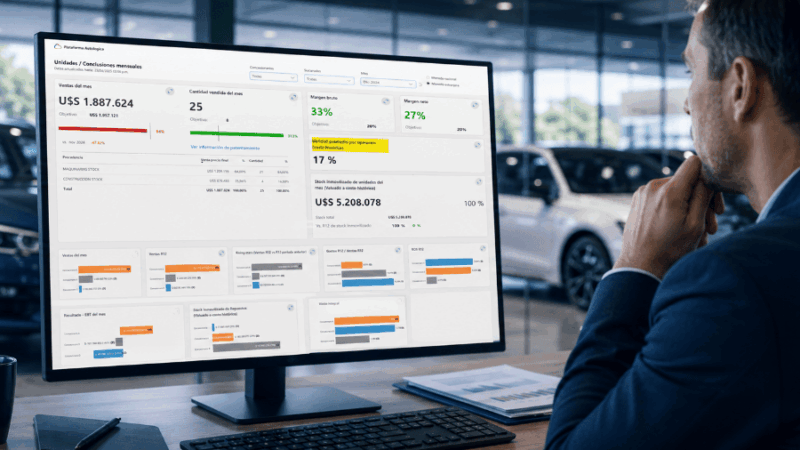
Over 30 years, we’ve worked alongside hundreds of aftersales managers in their search for the recipe for an efficient, profitable, and productive workshop. Along the way, we’ve adopted practices, technology, and habits that, step by step, bring operations closer to that ideal.
The recipe that comes closest to success rests on three pillars. Let’s look at each one.
Finding a Problem Is an Opportunity
The only business, department, or manager that always hits 100% of its goals is the one that doesn’t measure. It’s like saying the healthiest person is the one who never goes to the doctor. And in both cases, the first problem is often the last one, too.
Measuring means looking for opportunities, and aftersales managers who understand this aren’t afraid of KPIs.
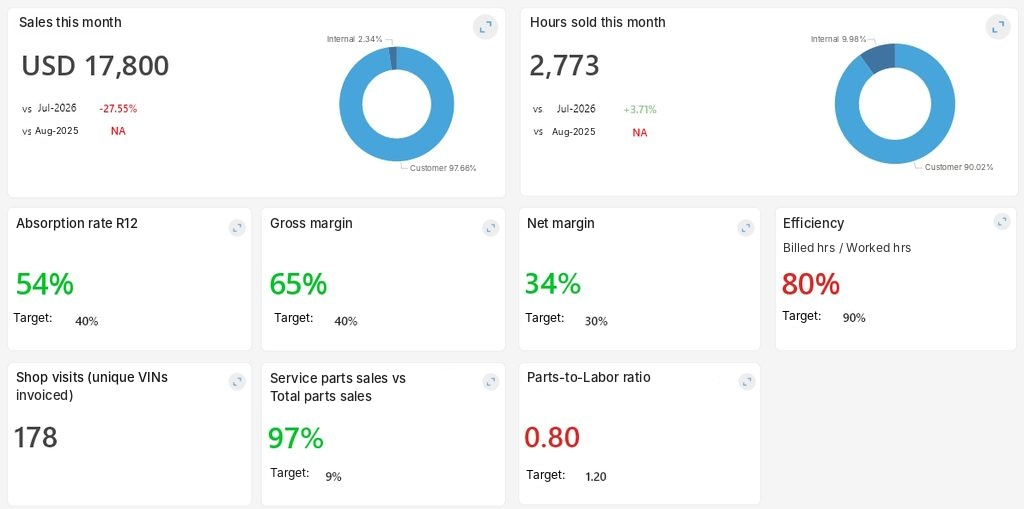
The first best practice is to get over the fear of data: it’s what helps us improve. In the case we’re using as a reference, the aftersales manager had a “feeling” that the department wasn’t being used to its full potential… and the numbers confirmed it.
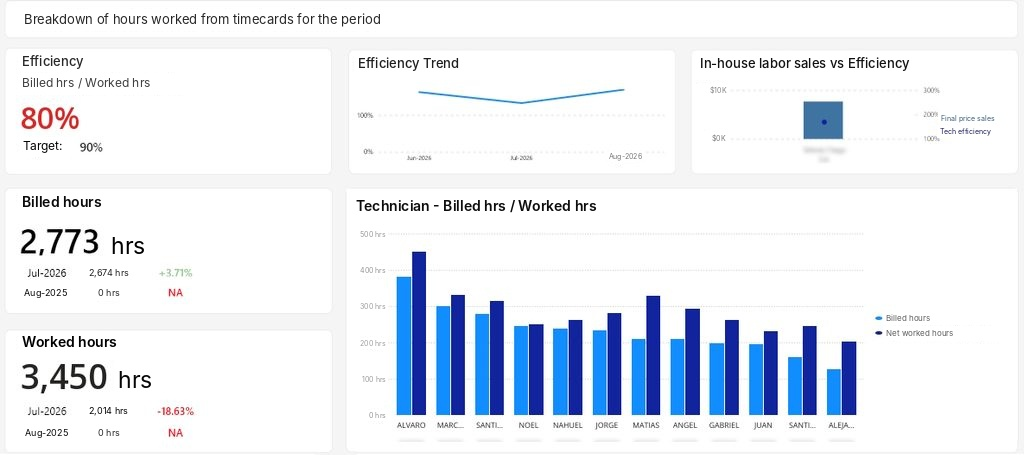
Far from stopping at that red number, he went a step further and discovered, for example, that efficiency had been picking up, but there was a lot of work to do with the technicians: while some hovered around 100%, others were below 60%.
Small Changes, Big Results in Aftersales
To bring that red number closer to the target, make better use of each technician’s hours, and get the most out of the workshop, a variety of strategies and technologies were put in place.
How is time being used?
Since they were already using Autologica, the first step was to implement Web Job Clock to measure each technician’s hours and gather key information about workshop performance. The tool made it possible to record the hours spent on each job, as well as delays and time spent on other tasks: breaks, training, cleaning the work area, or helping other departments.
For his part, the manager adopted the habit of keeping the technician dashboard always at hand to spot, for example, a delay as soon as it starts.
Where do jobs get stuck?
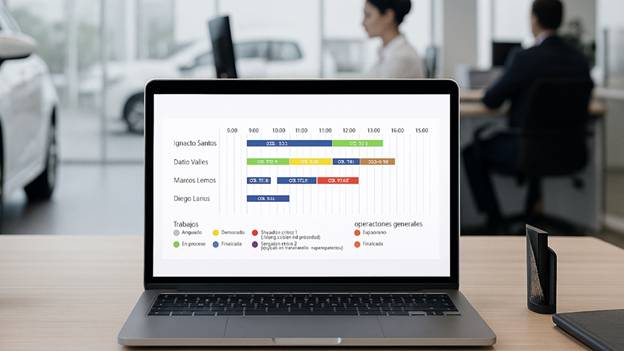
With better visibility into jobs in progress, the next step was to look at the workshop from a different perspective: the stages taking longer than expected. This revealed that many jobs sat idle for too long between the parts request to inventory and the parts being delivered. The solution? Improve communication between the two departments, prepare parts before each job, and add small best practices so jobs would move smoothly between stages.
Improvement boosters to fix low productivity
On top of these two major changes, other small actions added up, improving the workshop’s results from different angles.
Always-Busy Workshop
An empty appointment slot is money left on the table. That’s why they replaced manual appointment booking with digital tools that are easier for customers to use and that also send reminders to prevent no-shows.
Anticipating Every Job
Since the digital appointment tool lets customers indicate which jobs or services they need, the parts department could prepare in advance the parts the technician would need. This sped up every job and reduced delays caused by searching for parts.
Investing in Training
One of the clearest variables for improvement was getting closer to the ideal hours per job. They invested in training technicians to perform each task optimally and within the expected time. Then, they identified which jobs each technician was most efficient at and assigned them accordingly, progressively reducing the time spent.
Measure, Adjust, Repeat
Workshop efficiency doesn’t happen overnight, nor does it depend on a single action. In this case, it all started by daring to look at the numbers, even when they confirmed what nobody wanted to see. From there, measuring each technician’s time, detecting where jobs were getting stuck, and adding small improvements—digital appointments, pre-prepared parts, and training—turned a red indicator into a concrete improvement plan.
The key is to turn measurement into a habit: every data point is an opportunity to adjust a process, make better use of available hours, and offer customers a faster, smoother service. Because, in the end, an efficient workshop isn’t one that never has problems, but one that catches them in time and knows how to solve them.
Subscribe to the blog
Receive the new articles via email. No spam; you can unsubscribe whenever you want.